

Listen
 Apple Podcasts
 Spotify
 YouTube
About this episode
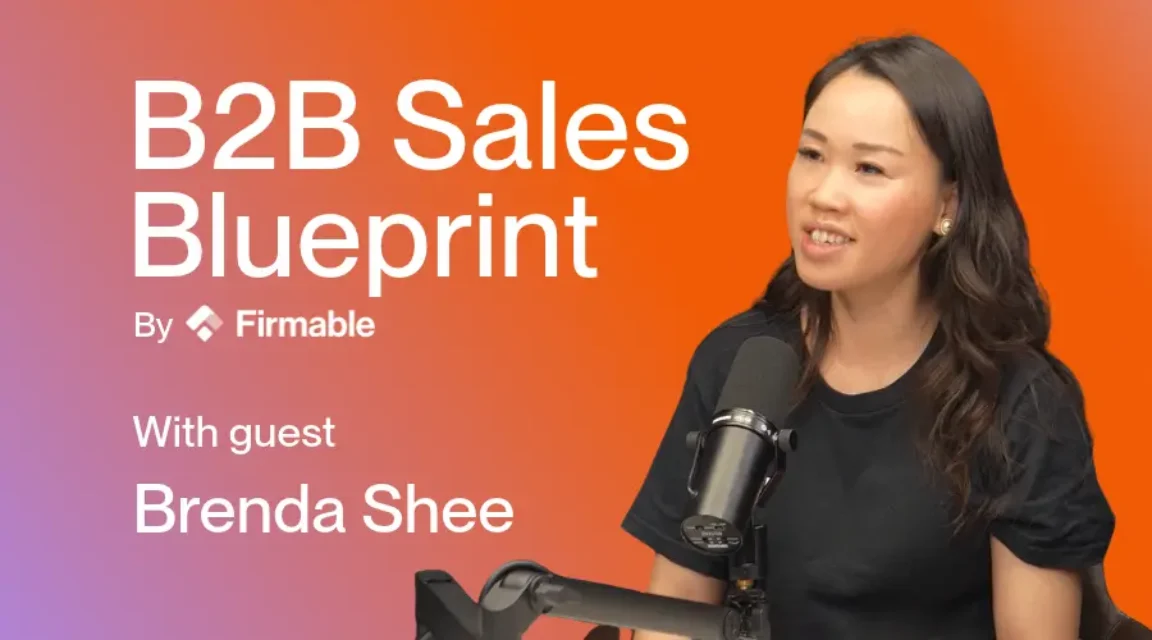
Brenda Shee leads outbound sales – including outbound sales territory planning – for Singapore-headquartered businesses at Airwallex. She joined in 2024 to scale a team that started with four SDRs and four AEs. Today it spans Singapore and a new sales hub in Bangalore. Before Airwallex, she was the first BD hire at Aspire. There she helped find the startup niche that became a repeatable sales motion.
In this conversation with host Paul Perrett, Brenda explains why she took territory planning away from reps. She walks through how her sales ops team enriches lists by vertical – down to retail outlet counts and Meta ad spend – so reps know exactly what to pitch. She lays out how she tests a new segment with 20% of a rep’s time, and why she now drops verticals that don’t work instead of forcing them.
She also covers why new AEs hunt alone before they get an SDR, how she set up the Bangalore team to avoid territory conflict, and what she screens for in face-to-face interviews. It’s one of the most systematic takes on outbound in Asia we’ve recorded.
Key topics covered
[05:00] Why running her own startup gave Brenda the commercial acumen to talk numbers with leadership, not just pipeline
[06:14] How Aspire found its lowest-hanging fruit – startups – and built a VC referral channel to scale it
[08:22] The profiles that win in gritty, early-stage sales: ex-founders, side hustlers, and athletes
[12:15] Full-cycle AEs versus SDR-supported AEs, and why traditional businesses need a relationship-led rep
[14:03] The real challenge of outbound in Singapore: most SMBs aren’t on LinkedIn
[18:34] The segment test: back book data, TAM mapping, and 20% of a rep’s time
[21:09] Why sales ops, not reps, now owns territory design – and how vertical-specific enrichment tells reps what to pitch
[27:59] Why new AEs must hunt on their own before they’re paired with an SDR
[30:31] Why global playbooks don’t work in Asia, and what “speaking their language” really means
[34:18] Designing conflict-free territories so the process still works at 40 or 50 reps
Notable quotes
“The global playbooks don’t work in Asia.”
“You can’t be sending 10,000 emails. You need to be very targeted in the profiles that you want to acquire and speak their language.”
“I don’t want reps to be saying, ‘Hey, this is my territory or this is my deal.’ That’s what I feel is the biggest failure for most sales teams.”
“I used to think that every single vertical we’d be able to crack, but I’ve come to realize that certain verticals are just maybe not worth the time.”
FAQs on outbound sales territory planning
Airwallex’s Singapore outbound team centralizes territory design in a sales ops function instead of leaving it to reps. Each rep owns one vertical. Brenda Shee, Airwallex’s Head of Outbound Sales, says each rep should get at least 500 accounts per quarter, enriched with vertical-specific data.
According to Brenda Shee, markets like Singapore have a small TAM, so US-style mass outbound burns through accounts fast. Many traditional SMBs also have little online presence and rarely buy from people they don’t know. Outbound in Asia works when reps target tightly and use each industry’s own language.
Brenda allocates about 20% of a rep’s time to test a segment hypothesis drawn from existing customer data. Reps call 10 to 20 accounts to gather insights, not to sell. They also meet industry experts and use internal networks for introductions. If the segment fails, the team drops it completely.
Who this is for
Heads of sales, outbound leaders, and RevOps managers building or scaling outbound teams in Singapore and across APAC. It’s especially relevant if your reps are fighting over accounts, your ICP is one-size-fits-all, or you’re about to open a new segment or offshore hub.
CTA
- Subscribe to The B2B Sales Blueprint for weekly conversations with APAC revenue leaders.
- Explore Firmable to build enriched, vertical-specific account lists for your team.